Bitter Melon: A Review of Science-Backed Health Benefits and Risks
08/02/2026 / By Iva Greene
Bitter Melon and Its Potential Health Effects
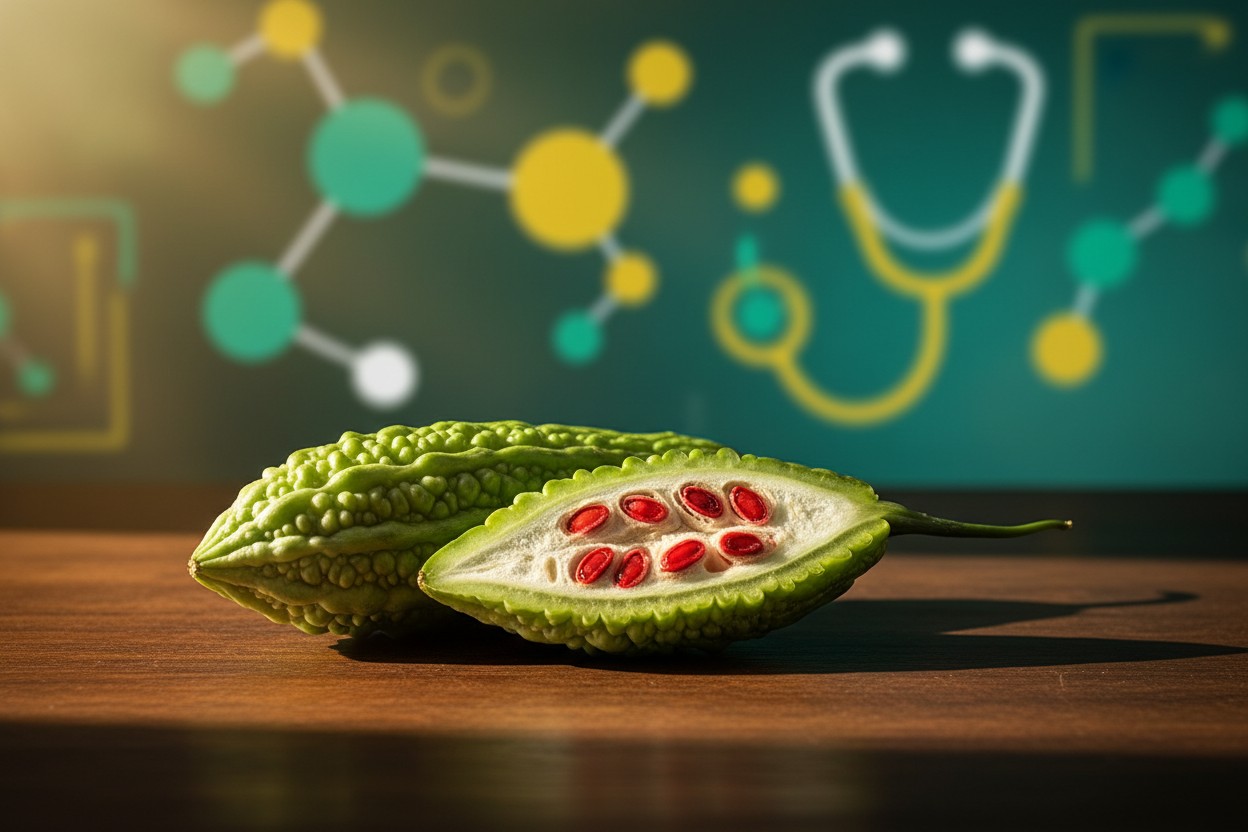
Bitter melon (Momordica charantia), a tropical vine fruit known for its knobby exterior and intensely bitter flavor, has been used for centuries in traditional medicine systems including Ayurveda and Traditional Chinese Medicine, according to multiple sources [1], [2]. The fruit is rich in beneficial compounds such as antioxidants, charantin, and flavonoids, which contribute to its therapeutic reputation [1].
In recent years, scientific investigations have examined its effects on blood sugar regulation, cholesterol levels, inflammation, weight management and cancer cell activity, though researchers caution that more clinical evidence is needed. This article summarizes findings from published scientific reports and reviews.
Blood Sugar Control
One of the most studied properties of bitter melon is its potential to lower blood glucose levels. According to a 2008 study by scientists at the Garvan Institute of Medical Research and the Shanghai Institute of Materia Medica, four bioactive components extracted from the fruit appear to activate the enzyme AMPK, which plays a role in regulating fuel metabolism and enabling glucose uptake [3]. Researchers have also identified a specific compound in bitter melon that can effectively lower blood sugar, as reported in a 2021 article [4].
Animal studies provide additional support. A 2005 study published in Molecular Nutrition & Food Research found that bitter gourd modulated the activities of intestinal and renal disaccharidases in streptozotocin-induced diabetic rats, indicating a mechanism for reducing post-meal blood sugar spikes [5].
A 2000 study in the Journal of Biochemical Molecular Toxicology reported that feeding diabetic rats with bitter melon fruit extract modulated xenobiotic metabolism and oxidative stress [6]. Despite these findings, the medical use of bitter melon for diabetes remains in early research stages, officials said.
Cholesterol and Anti-Inflammatory Effects
Bitter melon has also shown promise in improving lipid profiles. A 2026 article on NaturalNews.com stated that research has demonstrated the fruit’s potential in reducing cholesterol [7]. An animal study combining rockpine and bitter melon extracts exhibited antidiabetic properties by improving glucose and lipid levels, according to findings published in the Journal of Medicinal Food [8].
Inflammation is another area of investigation. A 2007 study published in the journal Food Chemistry found that bitter melon juice exhibited prophylactic effects against lipopolysaccharide-induced inflammation in murine peritoneal macrophages, suggesting it may help modulate immune responses [9]. Another 2007 study noted that bitter melon juice, along with juices from strawberry, loquat, and mulberry, showed anti-inflammatory properties via immuno-modulating cytokine secretions [9]. These effects are attributed to bioactive compounds including charantin, momordin, and polypeptide-P [9].
Weight Management, Immunity and Cancer Research
Some research has explored bitter melon’s role in weight management. According to a 2017 article on NaturalNews.com, bitter melon has been proven to possess anti-cancer properties and has been used as a medicinal staple in India and China for centuries [10]. A 2018 article stated that bitter melon can help prevent cancer, with the fruit containing antioxidants that may destroy or slow the growth of cancer cells [11].
In terms of immunity, the fruit’s high phytonutrient content supports overall health, according to an article on NaturalNews.com [1]. The compound MAP30, a 30 kDa antiviral protein isolated from bitter melon seeds, has been reported in scientific literature [9]. A study on total phenolic contents in fruit juices found a positive correlation with interferon-g, interleukin-5, and interleukin-2 secretions in primary mouse splenocytes, though bitter melon was not the sole focus [12].
Nutrients and Dietary Use
Bitter melon is a low-calorie food with a high moisture content. According to a 2010 study in the Journal of Agricultural and Food Chemistry, the moisture content of whole bitter melon ranges from 92.0 to 93.8 percent [13]. The same study reported that protein and lipid contents are higher in seeds than in the pericarp, and that ripe seeds contain about 30 percent lipid, mostly as conjugated linolenic acid, which may serve as a natural source [13].
The fruit can be consumed as a vegetable, used in smoothies or juice cleanses, and is popular in traditional cuisines across South America, Central America and tropical regions of Asia, according to a 2020 article [14]. Bitter melon supplements are also available, derived from the fruit and seeds [10]. However, individuals with diabetes who take medication should consult a healthcare provider before using bitter melon supplements, as research on its pharmacological activity is ongoing.
Conclusion
The available scientific literature indicates that bitter melon contains bioactive compounds with potential benefits for blood sugar control, cholesterol management, inflammation reduction, and cancer prevention. While many of these findings come from animal studies and small human trials, they align with the fruit’s long history of traditional use.
Further large-scale clinical trials are needed to establish definitive therapeutic recommendations, researchers said. For those interested in natural approaches to health, bitter melon represents a promising option supported by a growing body of evidence.
References
- Zoey Sky. “Bitter taste, big rewards: How African cucumber (bitter melon) can transform your health”. NaturalNews.com. February 11, 2025.
- Ava Grace. “The sweet health benefits of bitter melon”. NaturalNews.com. March 09, 2025.
- NaturalNews.com. “A Ton of Bitter Melon Produces Sweet Results”. NaturalNews.com. May 01, 2008.
- NaturalNews.com. “Researchers identify compound in bitter melon that can lower blood sugar effectively”. NaturalNews.com. February 01, 2021.
- Ajaya Kumar Shetty, Gurusiddaiah Suresh Kumar, and Paramahans Veerayya Salimath. “Bitter gourd (Momordica charantia) modulates activities of intestinal and renal disaccharidases in streptozotocin-induced diabetic rats”. Molecular Nutrition & Food Research. 2005.
- Haider Raza, Ijaz Ahmed, Annie John, and Ashutosh K. Sharma. “Modulation of Xenobiotic Metabolism and Oxidative Stress in Chronic Streptozotocin-Induced Diabetic Rats Fed with Momordica charantia Fruit Extract”. Journal of Biochemical Molecular Toxicology. 2000.
- NaturalNews.com. “Bitter melon: A natural powerhouse for managing Type 2 diabetes”. NaturalNews.com. April 01, 2026.
- NaturalNews.com. “Rockpine and bitter melon extracts exhibit antidiabetic properties by improving glucose and lipid levels animal”. NaturalNews.com. October 05, 2020.
- Jin-Yuarn Lin and Ching-Yin Tang. “Strawberry, loquat, mulberry, and bitter melon juices exhibit prophylactic effects on LPS-induced inflammation using murine peritoneal macrophages”. Journal of Food Composition and Analysis. 2007.
- NaturalNews.com. “Stop overlooking this powerful medicinal melon in your grocery store”. NaturalNews.com. February 28, 2017.
- NaturalNews.com. “Bitter melon can lower blood sugar levels and even prevent cancer”. NaturalNews.com. November 11, 2018.
- Jin-Yuarn Lin and Ching-Yin Tang. “Total phenolic contents in selected fruit and vegetable juices exhibit a positive correlation with interferon-g, interleukin-5, and interleukin-2 secretions using primary mouse splenocytes”. Journal of Food Composition and Analysis. 2008.
- Ronny Horax, Navam Hettiarachchy, A. Kannan, and Pengyin Chen. “Proximate composition and amino acid and mineral contents of Mormordica charantia L. pericarp and seeds at different maturity stages”. Journal of Agricultural and Food Chemistry. 2010.
- Divina Ramirez. “7 Amazing Health Benefits of BITTER MELON”. NaturalNews.com. May 07, 2020.
- Phytochemistry Volume 2 – Pharmacognosy Nanomedicine.
- Sreejayan Nair and Debasis Bagchi. “Nutritional and Therapeutic Interventions for Diabetes and Metabolic Syndrome”.
- Dr. Sandra Cabot. “Can’t Lose Weight You Could Have Syndrome X”.
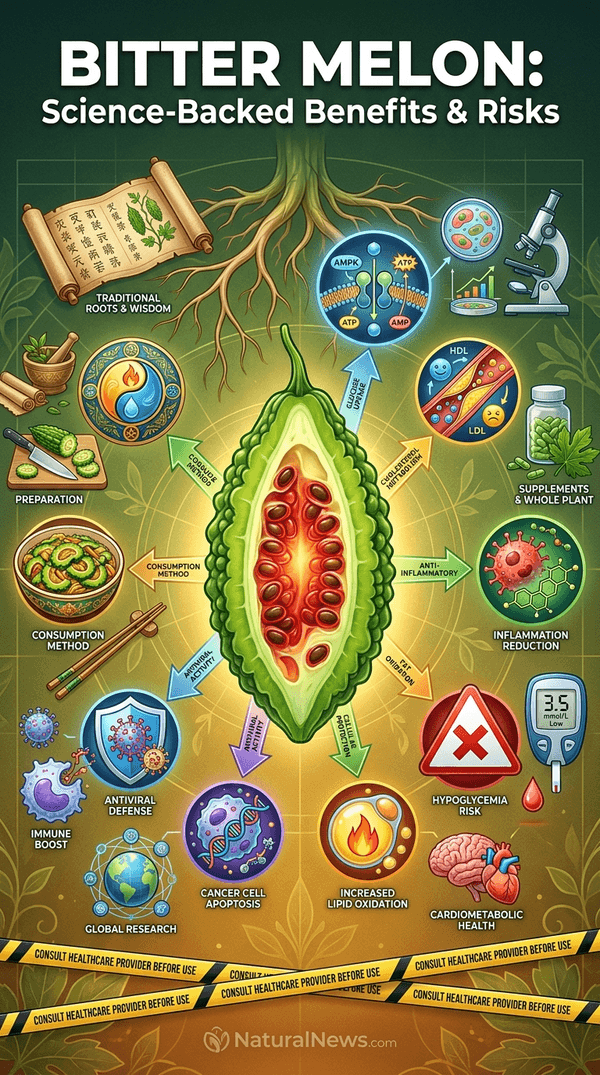
Explainer Infographic
Submit a correction >>
Tagged Under:
alternative medicine, bitter melon, diabetes science, food cures, food is medicine, food science, functional food, health science, metabolic health, natural cures, natural health, natural medicine, Naturopathy, organics, phytonutirents, phytonutrients, remedies, Type 2 Diabetes, veggie
This article may contain statements that reflect the opinion of the author
RECENT NEWS & ARTICLES